Integration, identity, and infrastructure
Institutional Application Portal & Single Sign-On
A portal approach that makes independent institutional applications accessible through a shared workspace and unified identity experience.
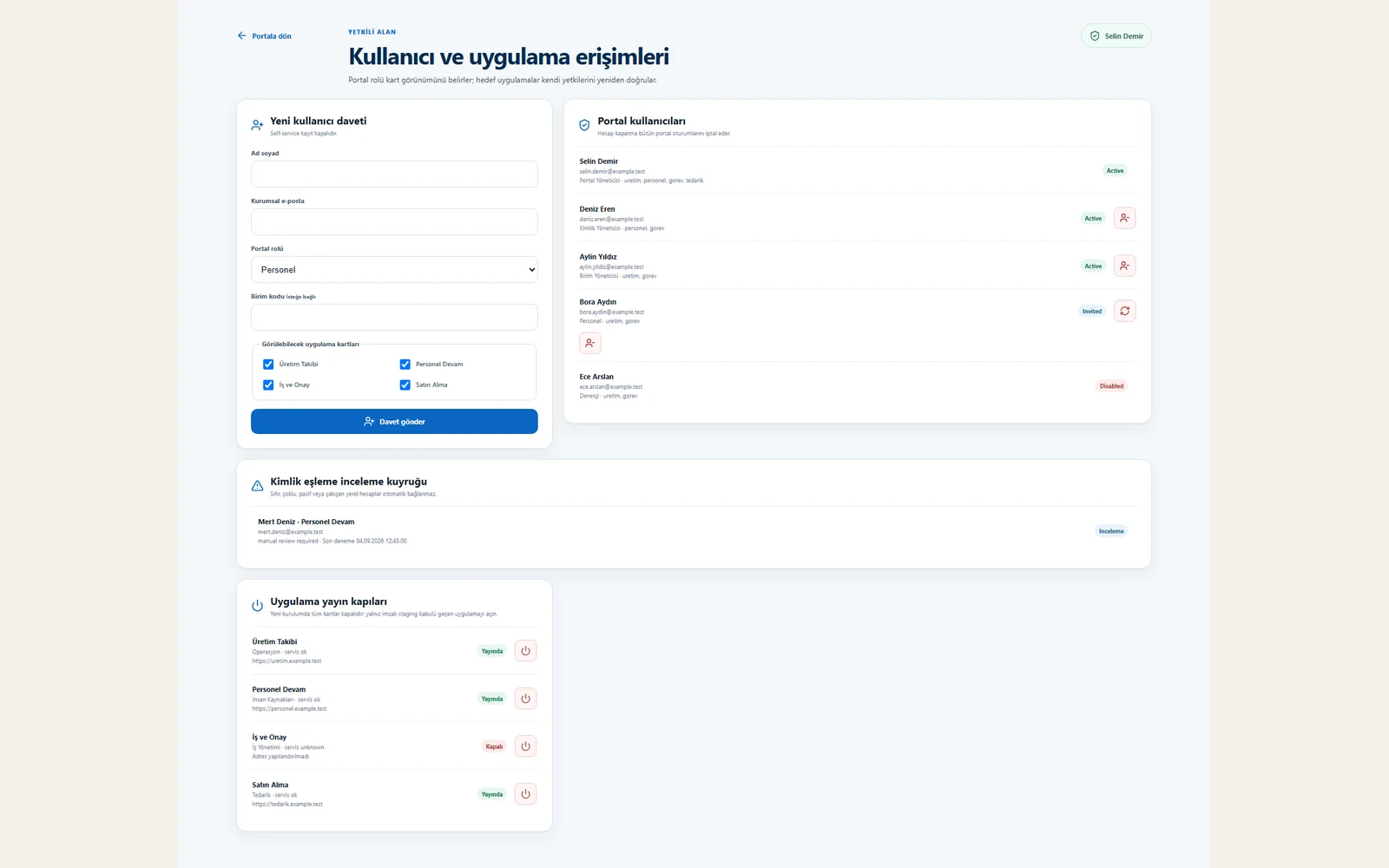
What this role enables
- 01
Invite users and assign portal roles
- 02
Set application-level access scope
- 03
Review conflicting identity matches
- 04
Follow integration and application release gates
Institutional context
Applications operated by different teams and infrastructures had their own data, role, and deployment boundaries. Users still needed a secure and understandable way to reach the right application.
My contribution
- Connected independent applications through a shared portal and identity flow.
- Prepared integration boundaries that preserve source-application permissions.
- Developed administration views for invitations, identity reviews and release gates.
Problem
Combining applications through one database or cross-domain session cookie would create security and maintenance risks, while separate sign-in screens fragmented the user experience.
Constraints
- Preserving each application’s data and authorization boundary
- Transferring identity safely across different hosting environments
- Never auto-linking ambiguous or conflicting identities
- Failing closed when an integration is not ready
- 01User
- 02Institutional identity
- 03Portal
- 04Signed context
- 05Source application role
Approach
A federation model was chosen instead of a shared database or cross-domain session. The portal verifies identity and transfers a short-lived signed context; the source application continues to make its own role decision.
Solution built
The design includes a shared institutional shell, application catalog, deep links, federated sign-in flow, adapter health checks, and a controlled account-linking process for conflicts.
For management
- Invite users and assign portal roles
- Set application-level access scope
- Review conflicting identity matches
- Follow integration and application release gates
Institutional impact
Users gain one starting point while independent applications retain ownership of their data, authorization model, and deployment lifecycle.
Technical scope
- Federated identity and signed transfer
- Application catalog and deep links
- Source-application role preservation
- Identity matching and conflict control
- Adapter health and configuration gates
- Independent deployment and rollback